Dear Heart, Why Him Funny Cross Stitch Review
As a designer who spends more time evaluating stitch density and fabric interaction than actually stitching myself these days, I approach every new digital asset with a healthy dose of skepticism. The market is saturated with designs that look charming in a preview window but fall apart when pushed through an embroidery machine or onto a complex garment. Recently, I pulled up the Dear Heart, Why Him Funny Cross Stitch pattern to see if it had the legs for real-world application. This isn't just another decorative motif; it’s a statement piece that sits at the intersection of humor, vintage aesthetics, and accessible craftsmanship.
The product description highlights that this is an easy cross stitch design using only full stitches, suitable for both beginners and experts. While that sounds simple on paper, simplicity in design is often harder to execute well than complexity. My goal here was to determine if this Cross Stitch Patterns asset holds up under the scrutiny of commercial production, custom gifting, and high-visibility retail environments like Etsy shops or craft fairs.
First Impressions: Mood and Visual Personality
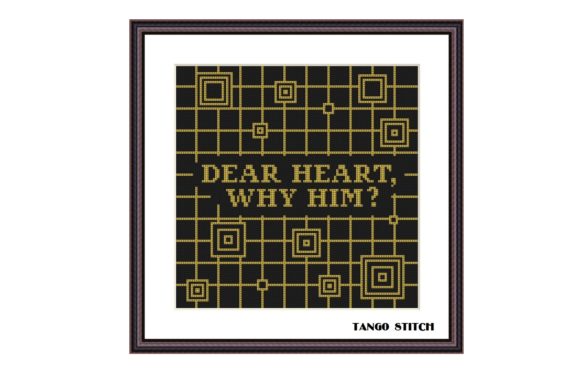
The moment you load the file into your digitizing software or preview it as a digital embroidery file, the mood is immediate. It carries a distinct "Gold vintage" energy. In the world of handmade products, nostalgia is a powerful currency. This design doesn't scream for attention with neon threads or chaotic layouts; instead, it whispers with character. The phrase "Dear heart, why him" suggests a playful, perhaps slightly sarcastic romantic sentiment, which resonates deeply with the current trend of personalized gifts that balance affection with wit.
From a pure graphic design standpoint, the layout feels balanced. Because it relies on a grid-based aesthetic typical of cross stitch, the visual weight is distributed evenly. This makes it incredibly versatile. It doesn't fight against the shape of the object it is placed upon. Whether you are looking at this as a standalone Graphics element or part of a larger collection, the clean lines ensure that the message remains legible even from a distance. For an Etsy seller or small business owner, this legibility is crucial. You want your customer to read the joke instantly without squinting.
Real-World Application: Where Does It Shine?
I’ve been testing various motifs for potential use in custom apparel and home decor, and I see this design thriving in specific niches. Let’s talk about the tote bag. A canvas tote is a blank canvas—literally. Placing the Dear Heart, Why Him Funny Cross Stitch pattern in the center or slightly off-center creates an instant boutique feel. The contrast between the structured, pixel-like nature of cross stitch and the soft, woven texture of cotton canvas is visually pleasing. It bridges the gap between traditional craft and modern streetwear.
Another strong contender is the sweatshirt or t-shirt. We are seeing a massive surge in demand for cozy, humorous knitwear and jersey goods. Embroidering this design on the chest pocket area of a hoodie or centered on the back of a heavyweight tee adds a layer of professionalism that prints simply cannot match. It implies durability and care. When a customer sees embroidery, they perceive higher value. They assume the item will last longer and looks better after washing. This perception directly impacts your conversion rate and allows for a higher price point.
For those in the baby and nursery niche, this design offers a unique twist. While many baby items lean toward pastels and animals, there is a growing market for parents who appreciate dry humor. A onesie or a burp cloth featuring this pattern stands out on social media feeds. It’s shareable content. People love to post things that reflect their personality, and a funny cross-stitch quote does exactly that. It transforms a basic utility item into a conversation starter.
Technical Considerations and Fabric Interaction
However, not every surface is created equal. As an experienced reviewer, I must caution you about where this design might struggle. The instruction notes that it uses only full stitches. This is generally good news for stability, but it also means the design has a solid block of texture. If you attempt to place this on a highly textured fabric, such as a heavy bouclé wool or a thick terry cloth towel, the definition of the letters may get lost. The thread needs a relatively flat surface to pop.
Stretchy fabrics present another challenge. While cross stitch is inherently stable because it locks the fabric threads, applying it to thin, stretchy materials like spandex blends requires careful stabilization. Without the right backing, the hoop marks can be severe, and the tension might pucker the fabric over time. I recommend always using a cut-away stabilizer for garments that will be worn frequently, especially around the shoulders and waist where movement occurs.
Dark fabrics require extra attention to thread choice. The "Gold vintage" aspect of the design suggests metallic or warm-toned threads. On black or navy fabric, gold can look stunning, but you must ensure sufficient coverage. Thin metallic threads can sometimes break or snag if the stitch density isn't high enough. Conversely, on light fabrics, the same gold thread might lack contrast unless paired with a darker outline or shadow stitch. Always test your thread colors against your actual fabric swatch before committing to a large production run.
Strategic Placement for Maximum Impact
When designing your final product, consider the scale. This pattern works beautifully in medium-sized hoops. Trying to cram it into a tiny 4x4 inch hoop might make the text too small to read comfortably, while blowing it up to fit a large jacket back might lose the intimate, personal feel of the quote. Find the sweet spot where the text is large enough to be legible but small enough to feel curated.
It also pairs exceptionally well with other elements. If you are creating a matching set, such as a kitchen towel and an apron, this design can serve as the anchor. Add simple floral borders or minimal geometric shapes around it to frame the humor without overwhelming it. This approach elevates the embroidery project from a simple novelty to a cohesive brand identity.
Commercial Viability and Licensing
For the craft business owners among us, the most critical question is always licensing. Before you list this as a small shop product, verify the terms. Does the license allow for unlimited finished goods sales? Is there a cap on units? Many designers offer different tiers for personal use versus commercial use. Assuming it is cleared for commercial sale, this design has high resale potential. It appeals to a broad demographic—couples, friends, and individuals with a sense of irony.
Creating printable mockups is essential for marketing. Show the design stitched on different textures: denim, linen, felt, and fleece. Show it on a tote bag hanging on a rack, embroidered on a pillow cover in a living room setting, and stitched onto a cap at a festival. Visual context helps buyers imagine the end result, reducing hesitation and increasing trust in your handmade product.
Final Verdict
The Dear Heart, Why Him Funny Cross Stitch pattern is a solid addition to any designer’s library. It is technically straightforward, visually appealing, and emotionally resonant. It avoids the pitfalls of overly complex digitizing while still delivering a premium look. Whether you are a beginner looking to build confidence with a reliable design or an expert seeking a quick, high-margin item for your store, this design delivers.
Just remember to respect the fabric. Test your samples. Check your tension. And above all, let the humor shine through. In a market flooded with generic quotes, a well-executed, witty cross-stitch design cuts through the noise. It tells the buyer that you care about quality, detail, and a good laugh. That is a combination that sells.